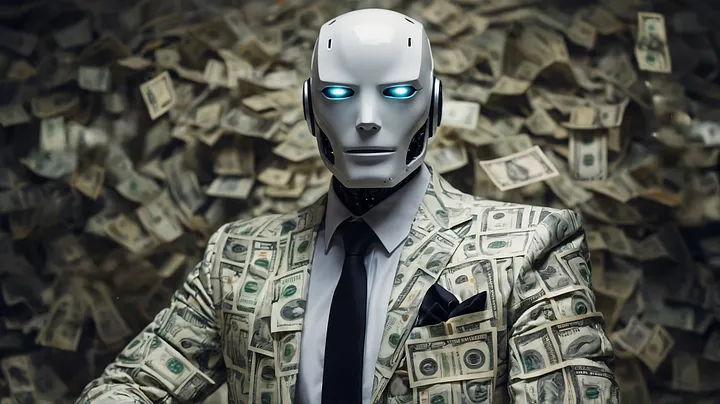
What will AI be like in 2050?
As an AI language model, I can't predict the future with certainty, but based on the current trends and advances in AI technology, we can make some educated guesses about what AI might look like in 2050...
What will AI be like in 2050? I by 2050:
It is to be expected that AI will be much more advanced and sophisticated by 2050 than it is today. Some possible advances that we could see in AI by 2050 are:
Intelligence on a human level:
AI systems could achieve intelligence at the human level or beyond, allowing them to perform a variety of cognitive tasks that were previously thought to be exclusively human.
General AI:
AI systems that can learn and adapt to a variety of different tasks and environments instead of being specialized in a single task.
Conscious AI:
AI systems capable of self-knowledge and awareness, potentially leading to new ethical and philosophical questions about the nature of consciousness.
Brain-computer interfaces:
AI systems that can communicate directly with the human brain and enable new forms of communication and control.
AI-supported creativity:
AI systems that can support people in creative tasks such as writing, music composition and art.
Ubiquitous AI:
AI systems that are integrated into all aspects of our daily life, from household appliances to transportation systems.
Privacy concerns:
However, it is also important to consider the potential risks and challenges associated with these advances, such as privacy concerns, cybersecurity threats, and job relocations.
Therefore, it will be important to ensure that AI is developed and used in such a way that it benefits humanity and addresses these challenges.
What will AI be like in 2050?
Today we will discuss something that has been a controversial topic for years. It's about the future of artificial intelligence. We will talk about what AI will look like in 2050. In this text we share the latest research results and expert opinions on this topic.
AI TODAY
Before we dive into the future of AI, let's take a look at the current state of AI. AI has grown rapidly in recent years and the technology has already been integrated into several industries. From self-driving cars to virtual assistants and chatbots, AI is making our lives more convenient and easier.
The current trend suggests that AI will continue to innovate and introduce new applications and expand its reach to other areas. Although AI is not yet perfect and has limitations, it has paved the way for a transformative future.
THE FUTURE OF AI
As technology advances and AI becomes mainstream, the future of AI is exciting and full of possibilities. According to experts, AI is expected to change various industries, including healthcare, education and entertainment.
In the future, AI will be more robust and offer more personalized experiences. The technology is becoming more accessible and user-friendly, which makes it possible for everyone to use AI.
In addition, with advances in computer chips, AI systems will make decisions and process data more efficiently. AI will also further improve your ability to recognize human emotions and help in decision-making.
AI-FURTHER DEVELOPMENT
AI will continue to advance in the areas of machine learning, computer vision and natural language processing. Machine learning is becoming more and more accurate and an important tool in decision-making processes. As a result, AI will revolutionize the way companies work and interact with their customers.
AI will also play an important role in healthcare, where it will help doctors diagnose diseases faster and more accurately. It will also help in the development of personalized treatment plans that lead to better health outcomes.
THE IMPACT OF AI
Despite the growing excitement around AI, some people are still skeptical about its effects. Many fear that it will replace human jobs and cause unemployment. However, experts believe that while AI will automate certain tasks, it will also create new jobs and opportunities.
AI will allow us to automate repetitive tasks so that we can focus on more creative and innovative tasks.