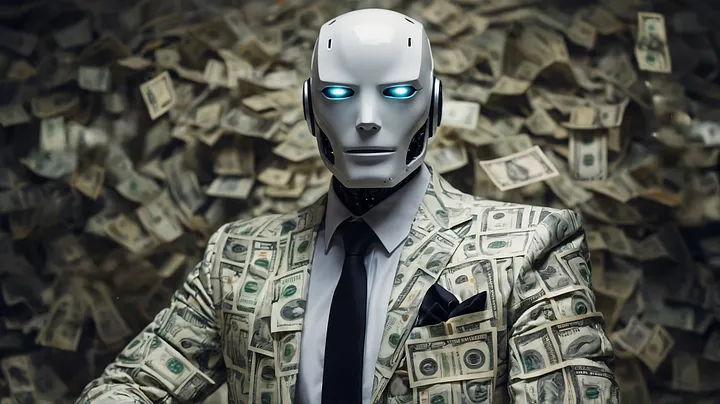
Can AI replace humans in future?
AI has the potential to automate many tasks that are currently performed by humans, but it is unlikely that AI will completely replace humans in the near future...
Can AI replace humans in future? AI difficult or impossible:
There are certain tasks and jobs that are difficult or impossible for AI to perform, such as those that require creativity, empathy, and social skills. For example, jobs in the fields of art, healthcare, education and social work are unlikely to be fully automated by AI, as they require human skills such as emotional intelligence and the ability to connect with others.
AI technology continues to advance:
However, AI is already starting to automate many jobs that are repetitive or require a high degree of precision, such as data entry, manufacturing and transportation. As AI technology continues to advance, it is likely that more jobs will be automated in the future.
Although AI has some jobs :
It is important to keep in mind that while AI can automate some jobs, it also creates new jobs and opportunities in areas such as data science, robotics, and AI development. As machines take on more routine and everyday tasks, people can focus on tasks that require creativity and critical thinking, resulting in more fulfilling and satisfying work.
The potential of AI:
In conclusion, it can be said that AI has the potential to replace people in certain tasks and jobs, but it is unlikely that it will completely replace humans in the near future. Instead, AI is likely to expand human capabilities and create new opportunities for work and innovation.
Can AI replace humans in future?
Today we will discuss a topic that has been doing the rounds for years and is still the subject of debate among scientists and experts. In other words, can AI replace humans in the future? Let's dive in!
AI stands for Artificial Intelligence:
First of all, we need to understand what AI is. AI stands for Artificial intelligence, i.e. the computer-aided reproduction of human intelligence. With technological progress, AI has reached amazing heights in terms of its capabilities to perform tasks that were once reserved exclusively for people.
Speech and speech recognition:
AI has capabilities ranging from natural language processing and speech recognition to decision-making and cognitive tasks. This has led to many speculations that AI could soon replace the human intellect and human labor.
AI has already replaced humans:
One of the areas where AI is already replacing humans is the manufacturing industry. The use of robots for assembly and packaging has led to efficient production with fewer errors. This has led to increased speed and reduced production costs, which is beneficial for the industry.
AI the human intelligence:
However, the question remains, can AI replace human intelligence in more complex areas such as medicine, law or education? AI undoubtedly has the ability to process large amounts of data, but it still lacks human creativity and the ability to think critically and out of the box. Humans possess emotional intelligence that allows them to make decisions, while machines only follow the preset protocols.
Considerations to consider:
It is also important to take into account ethical considerations when weighing the possibility of replacing people with machines. AI has no empathy, which means that it cannot show compassion, understand emotions, or distinguish between right and wrong. The inclusion of AI in service industries such as healthcare could raise ethical concerns as it decides the outcome based on the algorithm.
AI is an integral part of our future:
For the future, it is important to understand that AI will be an integral part of our future, but it is not the end of human labor. Machines will make tasks easier and more efficient and allow people to focus on creative and innovative work. AI can only replace everyday tasks that are repetitive and leave decision-making and emotional management to humans.
Although AI has abilities:
In summary, it can be said that although AI has abilities, such as processing huge amounts of data faster and more efficiently than humans, it is limited in terms of its ability to think critically and creatively, make decisions or show compassion.
AI is completely human:
Therefore, the possibility of AI completely replacing humans is not imminent. Instead, the future of AI is a collaboration between intelligent machines and humans that leads to a more efficient, creative and innovative workforce.