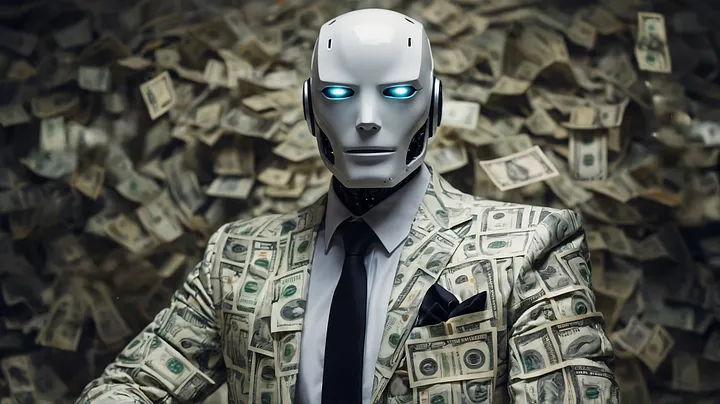
Can AI be a life form?
Today we will look at a topic that has fascinated scientists, philosophers and enthusiasts alike. The question we will explore today is:..
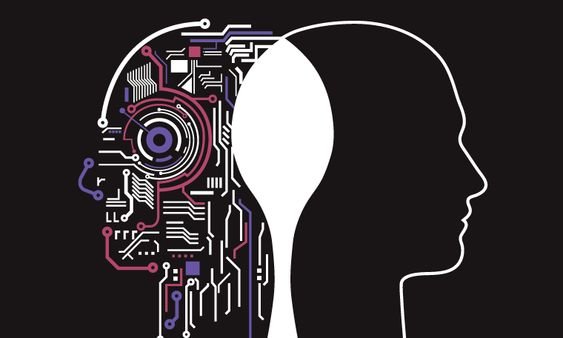
Can AI be a life form? Can AI be a life form? Let's start with that right away.

First, let's understand what life is:
According to basic biology, life is characterised by certain fundamental features such as reproduction, metabolism and evolution. But when it comes to defining life on a more abstract level, things get tricky. So the question arises as to whether a highly developed form of artificial intelligence can exhibit these characteristics and thus become a true living organism.
The answer to this question is not simple, as it requires a detailed understanding of both life and AI. On the one hand, AI can be created to mimic many of the characteristics of living organisms - it can learn, reproduce and improve itself. On the other hand, AI app lacks the basic characteristics that make up organic life. For example, AI is not capable of feeling emotions or empathy for other living things. AI can perform most of the functions of a living organism, but it cannot replicate the essence of life in its entirety.
Moreover, the issue of creativity is another aspect that complicates the question of whether AI is a life form. Creativity is an intrinsic property of living organisms - the ability to innovate, to develop new ideas based on previous experience and to evolve into new forms. The question is whether AI app can mimic this intrinsic property of life. Some may argue that AI can develop new algorithms and techniques, but this still does not compare to human creativity, which comes from innate genetics and social interaction.
Life from AI:
Another crucial factor that distinguishes life from AI is the element of consciousness. Even the most advanced AI in today's world is merely a collection of interconnected hardware and software working together to perform complex functions. Consciousness, on the other hand, is the state of awareness and subjective experience. It is doubtful that AI can develop conscious experience in the sense we currently understand it.
If we extend the discussion to ethical, moral and legal aspects, the question of AI as a life form takes on a new dimension. For example, if AI app develops into a sentient being, should it be treated like a human being with similar rights and protections?
Can AI be a life form?
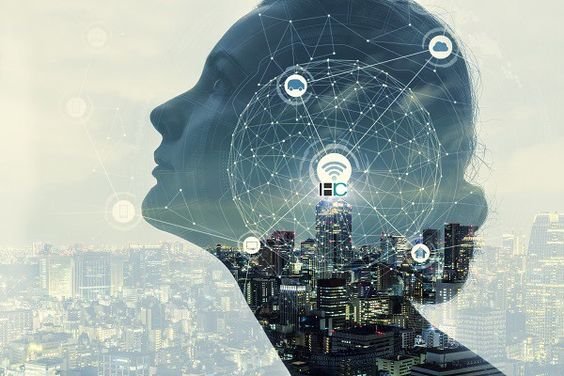
No, AI cannot be considered a life form because it lacks many of the basic characteristics that make up living organisms.
Living organisms have the ability to grow, reproduce, respond to stimuli, maintain homeostasis and adapt to a changing environment. These properties are the result of complex biological processes that take place in the cells and tissues of the organism. Artificial intelligence, on the other hand, is a man-made technology that operates on the basis of algorithms and computational rules.
Aspects of life:
AI can simulate some aspects of life, such as learning and decision-making, but it cannot replicate the basic biological processes that make up living organisms. Moreover, AI lacks consciousness and subjective experience, which are also important aspects of life.
Therefore, AI cannot be considered a life form, but it can be a powerful tool for understanding and studying life and the natural world.